


Fillers in Scottsdale, AZ
At Forma Plastic Surgery in Scottsdale, dermal fillers offer a non-surgical way to restore lost volume, soften lines, and bring balance back to your features. “Forma” comes from the Latin word for beauty, and that philosophy guides every syringe we place – subtle enhancement that looks like you, only more rested and refreshed.
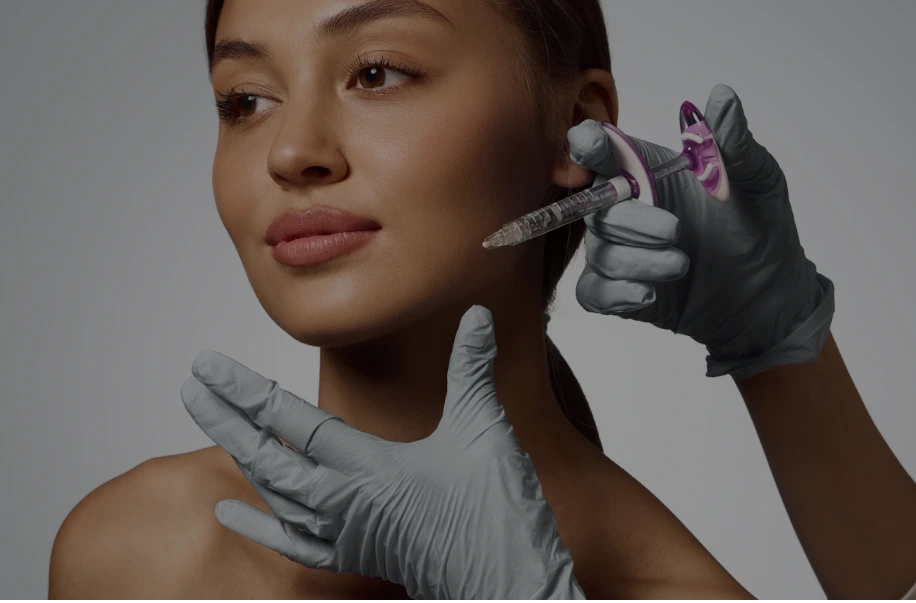
Table of Contents
What Are Dermal Fillers?
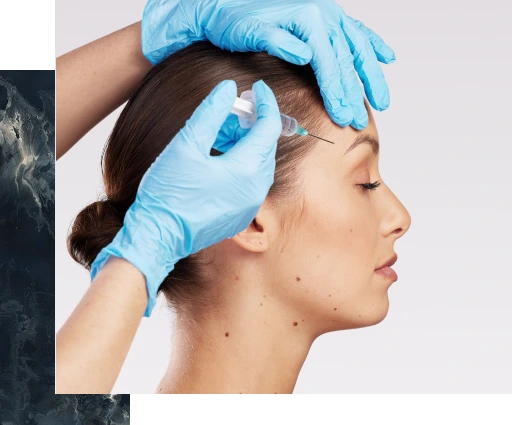
Dermal fillers are injectable gels placed beneath the skin to replace lost volume, smooth creases, and refine facial contours. As we age, the face loses fat, collagen, and bone density while gravity shifts remaining tissue downward – producing hollowing under the eyes, flattening cheeks, deepening folds around the mouth, and thinning lips.
Fillers address that loss directly. Depending on formulation and placement, they can lift the midface, define the jawline and chin, restore temple hollows, add structure to the lips, and soften nasolabial folds and marionette lines. Treatments are performed in-office, typically in under an hour, with no general anesthesia and no surgical downtime.

Areas Treated
Dermal fillers can restore volume, refine contours, and enhance facial balance in a variety of areas, including:
- Lips
- Cheeks
- Under-eye hollows (tear troughs)
- Temples
- Chin
- Jawline
- Nasolabial folds (smile lines)
- Marionette lines
- Corners of the mouth
- Fine lines around the lips (smoker's lines)
- Nose (non-surgical rhinoplasty, when appropriate)
Types of Dermal Fillers
Not all injectables behave the same way. Products differ in thickness, lift capacity, flexibility, and longevity – and the right choice depends on the area treated and the result you want.
Hyaluronic Acid Fillers
Hyaluronic acid (HA) is a sugar molecule the body already produces, which is part of why HA fillers are the most widely used category in aesthetic medicine. Popular brands include Juvéderm and Restylane.
- Thinner formulations refine lip borders and soften fine lines under the eyes
- Thicker, more robust gels rebuild cheek volume, define the chin, and sharpen the jawline
- Most HA products include lidocaine for comfort during injection
- Results typically last 6 to 18 months
- Fully reversible – an enzyme called hyaluronidase can dissolve the product, making HA an excellent choice for first-time patients
Biostimulatory Fillers
Biostimulatory fillers take a longer view. Rather than relying solely on injected material, products such as Sculptra (poly-L-lactic acid) and Radiesse (calcium hydroxylapatite) stimulate your own collagen production, gradually improving skin firmness, elasticity, and thickness over months.
- Best suited to broader areas of diffuse volume loss – temples, cheeks, and the lower face
- Less suited to precise sculpting of small features like the lip border
- Results can last two years or more
- Generally not reversible, which makes your provider’s experience and conservative technique especially important
Our team will discuss whether a biostimulatory approach, an HA approach, or a combination best serves your goals.
The Filler Procedure
Consultation
Your visit begins with a facial assessment by one of our providers and a discussion of your goals, medical history, and prior treatments. Your provider will explain which products and areas are recommended and why – you should leave understanding the plan, not just agreeing to it.
Preparation
When medically appropriate, you’ll be asked to avoid blood thinners, fish oil, and alcohol for several days beforehand, as these increase bruising risk. Treatment areas are thoroughly cleansed, and topical numbing cream or local anesthetic is applied as needed.
Injection
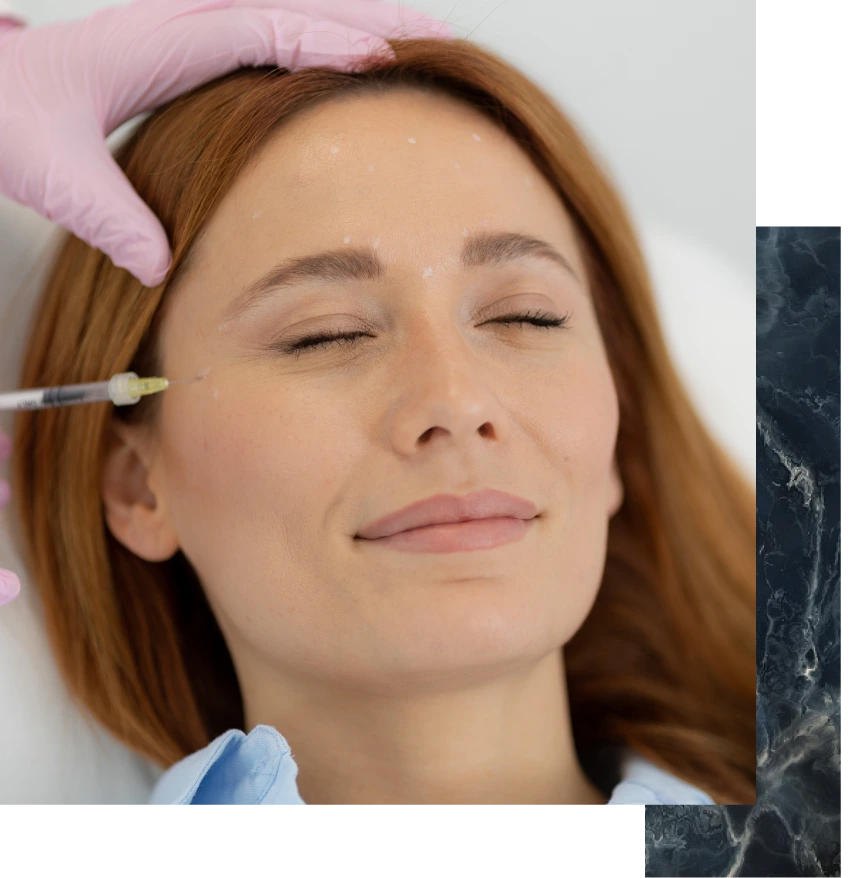
Using a fine needle or blunt cannula, your provider places product in precise increments, sculpting and frequently checking symmetry and contour. Most sessions take 15 to 60 minutes depending on the number of areas treated.
Immediately After
You’ll review the result together, and gentle massage or minor refinement may be performed. Ice packs and detailed written aftercare instructions are provided before you leave.

Recovery and Aftercare
Downtime is minimal – most patients return to normal activities the same day.
Expect mild swelling, redness, tenderness, and possible bruising at injection sites for two to seven days; lips tend to swell more than other areas. Apply cool compresses as directed, keep your head elevated the first night, and sleep on your back if possible.
- Avoid strenuous exercise, saunas, hot tubs, hot yoga, excessive sun and heat exposure, and alcohol for 24 to 48 hours
- Skip facials, massage, and other facial treatments for about two weeks unless advised otherwise
- Avoid rubbing, pressing, or manipulating the treated area to prevent displacing the filler
- Contact our office promptly for severe or increasing pain, blanching or unusual skin discoloration, or vision changes
Results and Longevity
Hyaluronic acid fillers deliver visible volume the moment they’re placed, though initial swelling means the true result isn’t apparent right away. Most patients see their settled outcome at about two weeks, once swelling resolves and the product integrates with surrounding tissue.
Biostimulatory fillers show modest immediate volume that fades as the carrier solution absorbs, followed by gradual, collagen-driven improvement over the next several months.
- Lip filler often lasts 6 to 12 months
- Structural filler in the cheeks, chin, and jawline commonly lasts 12 to 24 months
- Areas with frequent muscle movement metabolize product faster
- Many patients schedule annual touch-ups to maintain their result rather than starting over from baseline
Are You a Candidate?
You may be a strong candidate for dermal fillers if you:
- Notice flattening cheeks, hollow temples, or under-eye shadowing
- Have nasolabial folds or marionette lines that persist at rest
- Want fuller, better-defined lips or a more defined chin and jawline
- Prefer a non-surgical path to a more youthful, refreshed appearance with minimal downtime
- Are in good general health with no active skin infection or breakout at the treatment site
- Hold realistic expectations about what a non-surgical treatment can achieve
Fillers may not be appropriate if you’re pregnant or nursing, have certain autoimmune or bleeding conditions, or have known allergies to filler components. Patients with substantial skin laxity may be better served by a surgical procedure such as a facelift or blepharoplasty.

Benefits of Dermal Fillers
- Immediate visible change. Most volume results are apparent as soon as treatment ends.
- Smoother lines and wrinkles. Softens static creases including nasolabial folds, marionette lines, and lines around the mouth.
- Restored volume. Rebuilds fullness in the cheeks, temples, and under-eye area lost to declining fat and collagen.
- Enhanced features. Adds fullness and definition to the lips and sculpts the chin and jawline for improved facial balance.
- No surgery, no general anesthesia. Completed in a single office visit.
- Minimal interruption to your life. Most people return to work or normal activities the same day.
- Precise, incremental control. Product is added conservatively and can be built upon at a follow-up visit.
- Reversibility with hyaluronic acid products. HA fillers can be dissolved if adjustment is desired.
- A conservative first step. Explore facial rejuvenation before considering surgical options.
Add-On Treatments
Other treatments address muscle movement, skin surface quality, or excess tissue. Many patients combine multiple procedures.
Botox
Botox is a neuromodulator: it temporarily relaxes the muscles that create expression lines, which is why it’s used for forehead lines, frown lines between the brows, and crow’s feet. It softens wrinkles caused by movement.
Topical Creams
Topical skincare works at the skin’s surface. Well-formulated creams and serums can improve texture, tone, hydration, pigmentation, and very fine surface lines, and they’re valuable for long-term maintenance.
Resurfacing Treatments
Resurfacing treatments, such as microneedling, chemical peels, and DiamondGlow facials, improve skin quality but don’t restore contour. The most complete results usually come from pairing surface treatments with volumetric correction.
Cost of Dermal Fillers in Scottsdale
Dermal filler treatment in Scottsdale generally ranges from $650 to $1,800 per syringe, with a full treatment course being more expensive when multiple areas or several syringes are needed for balanced, full-face results.
Pricing varies based on the product selected, the number of syringes required, your anatomy, and the complexity of your treatment plan. The most accurate figure comes from an in-person assessment.

Your Aesthetic Journey Starts Here
Our name reflects our mission: forma, the Latin root of beauty. That philosophy shapes a practice built around the personalized doctor-patient connection often missing in aesthetic medicine today.
Board-Certified Expertise
Your injections are performed within a practice led by board-certified plastic surgeons with over 60 years of combined experience – surgeons who understand facial anatomy in three dimensions because they operate on it.
Education Before Injection
You’ll never be rushed into a syringe count. If fillers are right for you, we’ll say so. If a surgical procedure would serve your goals better, we’ll tell you that instead.
Safety and Quality
We use only high-quality, FDA-approved dermal fillers and advanced injection techniques, with a full-face assessment guiding every placement.
Frequently Asked Questions
Do filler injections hurt?
Discomfort is generally mild. Most filler products contain lidocaine, and topical numbing is applied before treatment. Patients typically describe a brief pinch and pressure sensation.
How long does a filler appointment take?
Volume improvement is often visible immediately. Full results appear once minor swelling subsides – generally within a few days to two weeks.
When will I see results?
Volume improvement is often visible immediately. Full results appear once minor swelling subsides – generally within a few days to two weeks.
How soon will I look normal after treatment?
Most patients feel presentable immediately, though mild swelling is common for a few days. If you have an important event, schedule your treatment at least two weeks in advance.
Can filler be removed if I don't like it?
Hyaluronic acid fillers can be dissolved with hyaluronidase. Biostimulatory fillers are not reversible, which is one reason product selection is discussed carefully at consultation.
How many syringes will I need?
It depends on the areas treated and the degree of volume loss. Some patients achieve their goals with a single syringe; others benefit from a staged plan across multiple visits.
Can I combine fillers with Botox?
Yes. Combining a neuromodulator for the upper face with fillers for volume restoration is one of the most common and effective non-surgical approaches, and both can often be performed at the same visit.
Are fillers covered by insurance?
No. Cosmetic filler treatment is not a covered benefit.
Restore Volume. Reveal Your Best Features.
Beauty is forma – and yours deserves a plan built specifically for you. Schedule a consultation at Forma Plastic Surgery in Scottsdale and find out what thoughtful, anatomy-driven filler treatment can do.